


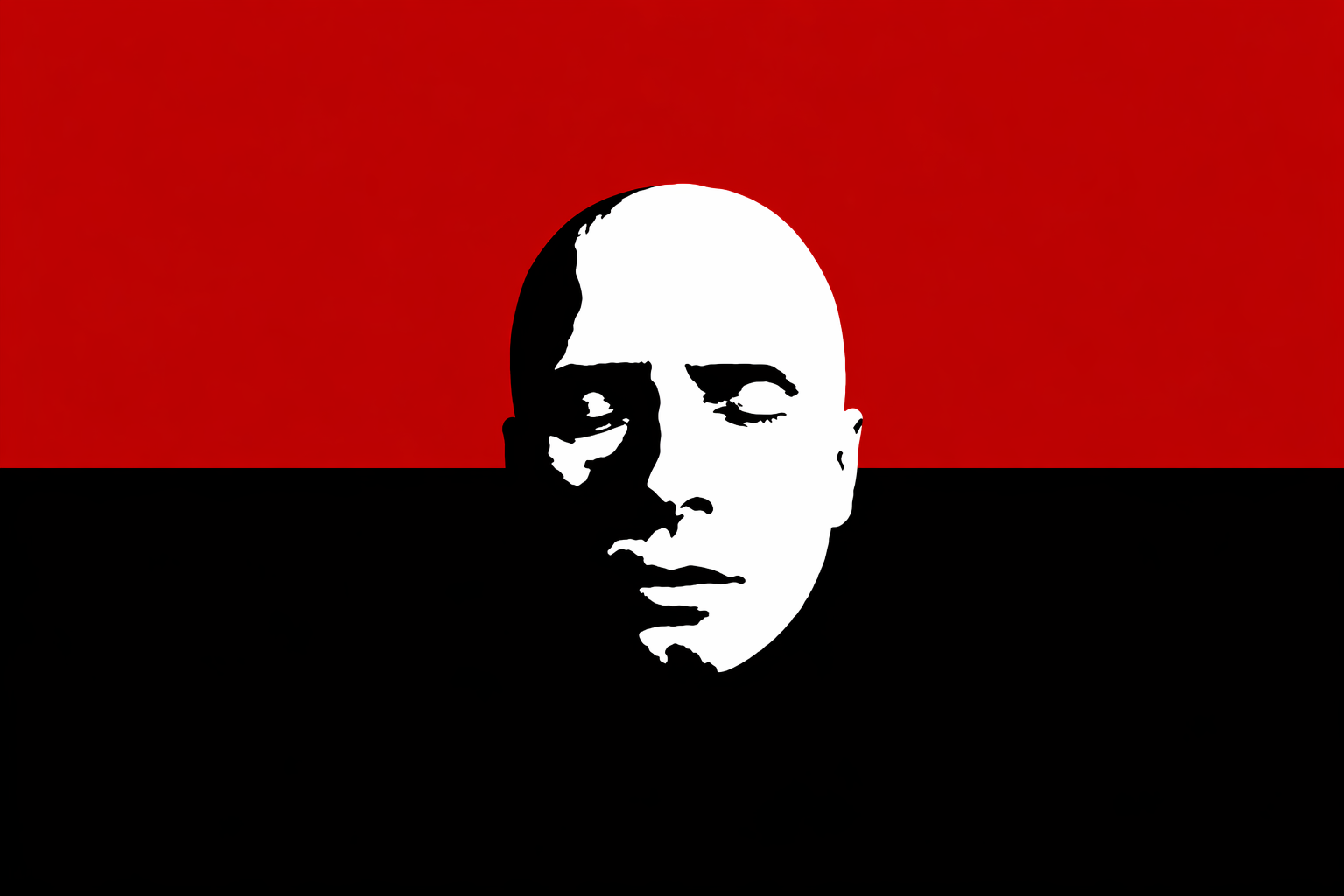
In this article, we aim to analyse the diplomatic implications of Bandera’s legacy, which is still celebrated in Ukraine while remaining a controversial figure in Poland and Russia, thus creating several points of tension. We will begin our study with a brief retrospective, going back over Bandera’s life after World War II.[3]
The death of Bandera
In post-war Ukraine, which was integrated into the USSR, the OUN’s enemies were no longer Germans or Jews,[4] but the Soviets and Poles, with whom an ethnically homogeneous border was drawn for the first time in history. Indeed, approximately 700,000 Poles and 488,000 Ukrainians were transferred between 1944 and 1946, often in extreme conditions.[5] Within these borders and under Soviet rule, Ukrainians lived in a civil war context while suffering the abuses of the OUN-UPA. Soviet control over Ukraine was so overwhelming that it successfully forced the Greek Catholic clergy into a political zugzwang, resulting in the assimilation of the Uniate clergy into the Russian Orthodox Church in 1945. While 70% of Greek Catholic priests agreed under pressure, those who refused were arrested. Yet, some priests who joined Orthodoxy were targeted by the OUN-UPA until 1960, when the Soviet Union’s massive repression defeated the last Ukrainian nationalist units.[6]
Due to the Soviet occupation, Stepan Bandera could not return to Ukraine at the end of the war. Therefore, he fled to Innsbruck, where he participated in social events with the Ukrainian diaspora, before moving to Munich in 1945, a city in which he would found the Zch OUN the following year.[7] This new organisation continued to assassinate opponents among the diaspora, in so-called DP Camps,[8] often targeting members of the OUN-M and thus perpetuating the internal struggles among Ukrainian nationalist organisations.
Despite his efforts to send men to Ukraine and a short cooperation with the CIA, his role was more that of a symbolic leader than a real actor in the struggle against the USSR.[9]
During Bandera’s lifetime, there was already a clash between several narratives about his movement. While he himself presented the OUN-UPA as a liberation movement which had never collaborated and was not guilty of any war crime, he never ceased to dream about a Third World War, during which Ukraine would finally achieve independence.[10]
In contrast, in Soviet propaganda, Bandera and the Banderists were considered as criminals allied with Nazis and as “bourgeois nationalists,” mostly because of their new American allies.[11] In response, Ukrainian nationalists tried to polish the image of the OUN, for example, with a brochure titled Who Are the Banderites and What Are They Fighting For,[12] minimising the acts of savagery and firmly denying their proximity to Nazism, which were considered as Bolshevik inventions. This heroic perception of Bandera and his followers was already rooted in some Ukrainian families.
His death by cyanide poisoning on 15 October 1959 at the hands of a Soviet agent made him a martyr and contributed to his mythologisation. Following this event, the Ukrainian diaspora actively spread his cult, for example by founding nationalist newspapers such as Shliakh peremohy in Munich or Ukraïns’ka dumka in London, whitewashing OUN-B’s crimes.[13] His funeral was celebrated in many cities throughout the world, including Munich, where 2 500 to 3 000 people took part.[14]
Progressively, the Ukrainian diaspora gathered around a narrative, but also symbols and rituals. Monuments were even erected as a tribute to his struggle, like in 1962 in New York, in SUM Ellenville camp, where a trident 12,8 meters high was inaugurated.[15]
In his homeland, despite the vast commemorative campaigns led by the Soviets to insist on Banderists’ cruelty, the emergence of Bandera as a symbol of resistance was facilitated by the regime’s own violence.
His cult in Ukraine and in the Ukrainian diaspora
Whether in Ukraine or within the Diaspora, the anniversaries of his death, along with other key dates for Ukrainian nationalists continued to be celebrated. In July 1982, for example, the OUN-B’s red and black flag was even raised on the Capitol for the 40th UPA’s anniversary.[16]
Bandera’s legacy was also preserved by giving him an almost religious status in new cultural institutions such as the Museum of the Ukrainian Liberation Struggle, inaugurated in 1962 in Nottingham and moved to London in 1979 for better accessibility. It became a sort of place of pilgrimage, exposing Bandera’s death mask, or even the clothes in which he died, considered by the Zch OUN as sacred.[17]
This historical narrative also joins a political one. Indeed, first Bandera’s hagiography by Petro Mirchuk excused OUN’s political assassinations, presented as a legitimate answer to the Poles’ terror. In this text, Bandera is described as a democrat, respecting human rights and who refused to collaborate with the Nazis. Banderists were even presented as victims and not as accomplices of the genocide. In this kind of narrative, Jews were sometimes shown as collaborators or were simply ignored.[18] The survival of this kind of statement could be explained by a partial falsification of historical documents, as Mykola Lebed[19] did, by trying to draw a flattering portrait of the OUN-UPA. Those same documents were then studied and diffused without being questioned by Ukrainian nationalists within the post-Soviet diaspora. Nevertheless, some members of this diaspora, including Mykola Klymyshyn, admitted this falsification.[20] Thus, in the late 1980s, the criminal nature of the movement seemed to be forgotten by a lot of Ukrainians, who considered Banderists as anti-Soviet fighters struggling for a free nation.
Those blurred borders between history and political ideology remained unchanged after the proclamation of an independent Ukrainian State. Since then, Bandera’s cult manifested itself in multiple ways, more varied than in the Diaspora during the Cold War. It appears in politics, historiography, novels, memorials, music festivals, bars, gastronomy and even in stamps, without ceasing to provoke debates.[21]
Naturally, museification and monumentalisation around Bandera continue, for example, with a monument erected in 1990 in Bandera’s place of birth, Staryi Uhryniv. Between 10,000 and 15,000 people attended its inauguration, seen as a sort of ritual. This phenomenon goes with a process of replacement, particularly striking in Western Ukraine, where Soviet leaders’ statues were dismantled while other ones were erected to glorify Bandera. It can be illustrated with the construction of the third monument in his village, a bronze statue recycled from a Lenin memorial, for the 50th UPA anniversary.[22]
The post soviet era also rhymes with Ukrainian nationalists’ comeback into public space and in politics. Sava Stets’ko, for example, Yaroslav Stets’ko’s wife,[23] founded the Ukrainian Nationalists Congress (KUN)[24] and was elected as a deputy in the Ukrainian Parliament from 1997 to 2002.[25] Several political parties inscribed themselves in Bandera’s legacy, like the SNPU,[26] which used the SS Wolfsangel as its symbol, and became the Svoboda party. The hate was then redirected toward leftist parties, the EU or even Russian-speaking communities in Ukraine, while their detractors were accused of “banderophobia.”[27]
Nevertheless, this period also saw a real upheaval in academic history, due in part to the opening of soviet archives, but also to the rediscovery of victims’ testimony, to this day overlooked by both soviets and Ukrainian nationalist organisations.[28]
However, it did not prevent an apologetic persistence in historiography, which could be illustrated by the creation in 2001 (by Ukrainians coming from the Diaspora) of the Institute for the Study of the Liberation Movement (TsDVR),[29] reediting and diffusing works of nationalist historians from the OUN-B, such as Petro Merchuk (1913-1999).[30]
In the public sphere, Bandera’s grandson, Stephen Bandera, is a well-known figure, participating in numerous ceremonies or folklorical celebrations, in Ukraine or abroad. He also received in 2010 the distinction of Hero of Ukraine by the president Louchtchenko, intended for his grandfather. This title will nevertheless be withdrawn the same year, under Ianoukovitch’s presidency, which reminds us that this historical figure is not universally accepted by Ukrainians.[31]
Regarding Bandera’s places of residence, they are still objects to monumentalisation and sacralisation, like in Dubliany, where he studied for a short time. There, a museum called “Stepan Bandera Museum: Centre of National-Patriotic Education,”[32] opened 4 January 1999, which was blessed by Greek Catholics and Orthodox priests. Even if Bandera has never joined UPA, an important part of the museum is dedicated nonetheless to the organisation. Once again, it is characterised by a form of memorial asymmetry, where nationalists are systematically presented as victims. It stands in front of a 28.5 m-high triumphal arch, adorned with a golden trident, mixing Fascist and post-Soviet aesthetics.[33]
However, the erection of monuments, busts and plaques in Ukraine is far from systematic. For example, Uzhgorod’s town council refused to glorify Banderists in this way because of the multinational character of the region.[34] Demonstrations in support of Bandera are not universally accepted either. In 2008, in Kyiv, two opposing protests took place, confronting nationalists and leftists.[35]
Furthermore, it would be judicious to highlight the survival of numerous soviet monuments, especially in Eastern Ukraine, or even new memorials recalling Banderists’ crimes. In Luhans’k, for example, in 2010, the greatest monument commemorating their victims was erected. The scene presents a mother being killed, flanked on one side by her child and on the other by a man in shackles, protecting them with his arms.[36] Nationalist celebrations are, moreover, constantly being condemned, notably by members of persecuted families.
Since 2014, especially in a context of war and after the Euromaidan, the memorial struggle around Bandera’s figure remains vivid in Ukraine. The museum in Staryi Uhryniv was even targeted by an explosion in February 2018, which brings to mind the constant atmosphere of hostility in which those debates are taking place.[37] The ambiguity of his perception in Ukrainian society is well depicted by Eleonora Narvselius, who writes that even if “the continuing canonisation of Bandera seems to diminish his popular appeal, in post-Maidan Ukraine, he, the OUN, and the UPA continue to be a part of heritage making with patriotic undertones and as such lend themselves to a variety of uses.”[38]
The president himself, Volodymyr Zelensky, perpetuates this ambiguity, carefully claiming that his opinion about Bandera is “quite normal”.[39] Eleonora Narvselius also notes an interesting phenomenon: an attempt to diminish Bandera’s image in Ukraine towards the rise of a new heroic figure in Zelensky. Indeed, the rising cult of such a controversial figure during the war and in a “decommunization” context could damage the Ukrainian international image and relationship, but it is also impossible for the president to publicly denounce such a well-known figure among the Ukrainian population.
Finally, the legal and institutional Bandera’s promotion can be put into perspective thanks to a UINP statistical detail published in 2018, stating “that while 1,320 Lenin monuments were toppled in the wake of the Euromaidan, only four new monuments to Bandera were erected at the same period, all of them in western Ukraine.”[40] In addition, most Ukrainians do not take part in this ideological division, and simply do not have a firm opinion on the matter, which seems unclear to them.[41]
Bandera and the OUN from the Polish Point of view: healing a memorial wound and an argument for anti-Ukrainian policy
In Poland, despite the extremely violent events in Volhynia at the end of World War II _including ethnically motivated massacres and forced deportations_ no efforts to preserve historical memory could be carried out successfully until the collapse of the USSR, as it was impossible for the survivors of those events and their community, called “Kresowiacy,” to talk about this trauma.
However, in the early 1990’s, their testimonies did not really contribute to soothing memories or improving Polish-Ukrainian relationships. Even if some serious works on reliable testimonies by historians such as Ewa and Wladyslaw Siemaszko have been published, those documents have been instrumentalised to serve a discourse referring to these massacres as a genocide.[42] Thus, Bandera’s movement fuels a so-called “Polish Martyriology”, even observable in the streets. For example, a Crucified Christ was erected in Wroclaw in 1999, with plates mentioning 2 000 graves of the victims of the Banderites.[43] Ten years later, in Legnica, a street took the name of “The Boulevard of the Victims of the Genocide of the OUN-UPA” [44]
This monumentalisation process goes hand in hand with a political narrative which had not stopped in the 2010s. It could be illustrated by the declaration adopted by the Lower House about the crimes of UPA in Wołyn 1943, qualifying them as “an ethnic cleansing with signs of genocide”. Despite the nuance added by Bogdan Borusiewicz, who was then Marshal of the Senate of Poland, stating that “we do not talk about the responsibility of Ukrainians or the Ukrainian state, but about the responsibility of the OUN and UPA,” this declaration has still been criticised by Polish leftists and liberals. The charges against those who voted in favour of this declaration centred on a lack of perspective about “the Kresy mythology”,[45] which would not take into account the fact that “for centuries Poland was a colonial power and occupier for Ukraine”.[46]
The start of the Ukraine-Russia conflict in 2014 has moved the debate about Bandera and his memory forward and made it far more complex. On the one hand, the movie “Wołyn”[47] published in 2016 shows that the OUN-UPA is still deeply rooted in Polish minds.[48] On the other hand, even some conservative Polish figures are concerned about this perpetuated hatred of Ukraine, which could truly damage the relationship between the two countries, especially when a collaboration seems necessary to deter aggressive Russian expansionist ambitions.[49]
To this, the impact of the growing anti-Ukrainian feeling in Poland must be added – a direct consequence of Ukrainian immigration which amounted to 3.2 million people in 2022.[50] Out of 38,4 million residents,[51] it represents more than 8% of the population in Poland. In Polish public opinion, the aversion towards Ukraine still grows, years after the start of the war, although this feeling is still not the prevailing one.[52]
In such a tense atmosphere, Andrii Portnov considers that “all Ukrainians and all Ukrainian symbols are inaccurately associated with ‘Banderism’ and responsibility for the massacres of the Poles.” He illustrated this phenomenon with the attack of a Ukrainian Greek-Catholic procession commemorating a Polish-Ukrainian military collaboration, attacked by local far-right extremists in Przemyśl.[53]
The former president Andrzej Duda, during an interview in May 2025, expressed his outrage after a diplomatic visit in Ukraine. “When I come to Ukraine and people hug me with armbands in the colours of the "Bandera flag" - this is absurd. I say that we cannot accept this, and they throw up their hands and say: "What's the matter? These are our colours. We fought against the Soviet regime under these colours."” However, he carefully pointed out that it could be explained by the fact that Ukrainians do not know much about this part of their history, due to the Soviet-period propaganda.[54] In the same vein, the current president, Karol Nawrocki, proposed in August 2025 to amend legislation in order to prohibit the red-and-black flag and other symbols recalling the OUN-UPA. He justified it, a little bit paradoxically, by presenting this proposal as a way to improve Polish-Ukrainian relationship: “In order to eliminate Russian propaganda and to place Polish-Ukrainian relations on a foundation of genuine partnership, mutual respect, and sensitivity, I believe that our draft legislation should include the clear message ‘Stop Banderism.’”[55]
Nevertheless, despite those political speeches and diplomatic declarations, it should be highlighted that the support provided to Ukraine is still relevant today. In September 2025, a governmental report published a study titled “Poland’s assistance to Ukraine in 2022-2023,” showing very high figures. During this period, Polish financial aid to Ukraine amounted to 25 billion EUR, which corresponds to 3,82% of Polish GDP, and puts the country in third place among the countries providing the most aid to Ukraine, after the U.S. and Germany. Military and humanitarian support was also very consequential.[56]
Russian memory and discourse about Banderists
The roots
In the RSFSR and then in Russia, Bandera’s memory was generally used as a tool to support the government’s socio-political ideology. Broadly speaking, we can even consider it a part of a national dialogue rooted in the cult of the Great Patriotic War.
Before discussing the instrumentalisation of Bandera’s memory, it's important to draw the boundary between the interplay of authentic grassroots memory and the strategic narratives of the Kremlin.
The perception of Bandera is not a "top-down" invention of the Soviet or Russian government. It is rooted in a genuine social trauma. Thousands of families (within the RSFSR) lost relatives during the brutal anti-insurgency campaigns in Western Ukraine that lasted until the mid-1950s. As David Marples points out, in the postwar period an estimated 30,000 people were killed by the UPA. They were mainly party members and soldiers sent to Western Ukraine from other parts of the Soviet Union.[57] For the average citizen, the "Banderovets" was therefore seen as a "traitor" who killed a grandfather or a great-uncle. This created an authentic hostility that existed independently of state propaganda.
Subsequently, we can say that the RSFSR government (and later the Russian Federation) did not create this feeling but took advantage of it and amplified it. It did so by integrating this specific trauma into the broader "Cult of the Great Patriotic War". The state transformed a national grievance into a universal civic value.
The first instrumentalisations
Soviet authorities didn’t waste any time. As it became clear with Operation Uranus that the Soviet Union would eventually push the frontline back toward the West, the Kremlin had to prepare the "re-sovietization" of territories lost in 1941, including Western Ukraine. This ideological campaign consisted of a cultural offensive designed to delegitimise the Ukrainian nationalist movement by saturating the public sphere with a new, state-sanctioned vocabulary of treason and was propelled through literature, state-sponsored pamphlets, public education and even cinema.
To illustrate this strategy, the 1959 movie Ivanna is a perfect picture.[58] It’s a Soviet State work about a priest’s daughter, who is horrified to witness the Ukrainian Greek Catholic Church (UGCC) collaborating with Nazi occupiers in WWII Lviv. This film served as a high-impact media platform for the Soviet "anti-Banderite" campaign, intended to merge religious and nationalist identities into a singular image of treason, by depicting the UGCC as a "nest of spies" that blessed Nazi atrocities. The narrative specifically framed "Banderites" as cynical manipulators who used the Cross to hide fascist collaboration, effectively justifying the state's prior violent repressions in Western Ukraine to an audience of over 30 million viewers.
Scholar like Bohdan Bociurkiv reinforces this, in his work The Ukrainian Greek Catholic Church and the Soviet State (1939–1950). His research reveals that Soviet authorities deliberately collapsed the distinction between clergy and insurgents, labelling them a unified "Uniate-Nationalist underground”[59] to ensure their total liquidation. In this context, Ivanna functioned as an emotional vehicle for the political objectives Bociurkiv identifies: a populist and justification for the state's effort to restrain the Ukrainian national identity.[60]
Overall, until the collapse of the USSR, the Soviet government maintained a consistent policy of discrediting 'Banderism' to leverage the ideological boundary between the Union and the Ukrainian SSR. Through this period, the “Banderite” issue progressively lost social and political importance and became a “relic of the past”, as the “problem” was effectively evinced by local authorities, as it was not considered as much a priority threat as the United States, NATO, and internal intellectual dissidents like Sakharov or Solzhenitsyn.
After the USSR’s collapse
Following the dissolution of the USSR, all the discourse surrounding Bandera’s memory, ideology and legacy kept a relatively low profile at first as both newly born Ukraine and the Russian Federation prioritised urgent socio-economic survival over “memory wars”. During the 90s, the Russian perception of Bandera remained a localised phenomenon that did not yet threaten the broader bilateral relationship. However, this period ended with the 2004 Orange Revolution.
According to historian Per Anders Rudling, Yushchenko’s presidency represented the "pinnacle of diaspora influence on history writing in Ukraine," elevating historical myths to state policy and providing funding to institutions tasked with developing "legitimising narratives" for OUN leaders.[61]
This institutional shift allowed Russian media to reactivate the "Banderite" label, framing these pro-Western political movements as a "fascist-inspired" threat to the post-Soviet order. This rhetorical tension reached a second breaking point in 2010 when President Viktor Yushchenko posthumously awarded Stepan Bandera the title "Hero of Ukraine." While the former president attempted to present these figures as "good Europeans" and democrats, Rudling also observes that, ironically, the habit of "projecting contemporary, politically convenient values back on the past" was, paradoxically, a "deeply rooted Soviet practice".[62]
The Russian MFA answered by releasing a statement condemning the decree as "an event so odious" that it insulted the memory of millions of victims of the Great Patriotic War[63]. This reaction on the highest diplomatic level signalled a resurgent interest, coming from the Russian state in the “Banderite” question. During this era, Bandera’s memory was used by the Kremlin to draw a red line between “friendly” Ukrainians (who shared the Soviet victory) and “Western-backed nationalists.”
The acceleration after Maidan
The third definitive breaking point came with the 2014 Maidan events and the ensuing conflict that began in 2022, which fundamentally fractured Russian-Ukrainian socio-political relations. Remarkably, more than sixty years after his death, Bandera’s legacy resurfaced to serve as a primary ideological battlefield. It has undergone a dual instrumentalisation. While in Ukraine, it was utilised as a cornerstone for asserting a distinct national identity, in Russia, it was simultaneously invoked to safeguard the 'anti-fascist' legacy of the Great Patriotic War and to provide a historical justification for the 'denazification' of Ukrainian society.
In the current Russian state narrative, the "Banderite" has become a de-territorialised enemy, a label applied to the current Ukrainian government and military that justifies “denazification.” The Russian MFA and other governmental institutions continue to communicate on the 1940s atrocities, creating a direct link between OUN’s collaboration with the Third Reich and Ukraine’s current alliance with the West. Bandera’s memory is thus utilised as a “moral justification” for military action, transforming a 20th-century insurgent into the primary symbol of a 21st-century “ideological existential threat” to the Russian state.
A potential political deadlock, or a tolerable duality?
The complexity of Bandera’s memory issues resides in the plural aspect of his representations. In each community studied, distinct narratives are deeply rooted in people’s memory at three scales: individual, collective, and political. This profound misunderstanding between different communities sharing such a conflictual history fuels hate rhetoric, particularly in the political sphere. However, it does not necessarily lead to an absolute impasse. In the Ukrainian case, the possibility of reconciling a critical approach with a patriotic discourse is already emerging, for example, with historians such as Mykola Riachuk.[64]
From the Polish perspective, despite the general aversion to Banderism and the growing anti-Ukrainian discourse, financial, political and military cooperation between those two countries is not deeply affected. An optimistic look at this issue is offered by Tatiana Zhurzhenko,[65] who emphasises the necessity of changing scales and healing memorial wounds with a local approach. Finally, the instrumentalisation of Bandera’s name in Russian political rhetoric, as well as the use of symbols referring to the OUN-UPA by Ukrainian forces, both constitute a major obstacle to a potential compromise about this historical figure and the postwar events. Until then, Bandera remains a point of tension, endlessly stirring up the flames of conflict in Eastern Europe.
Bibliography :
Bechtel, Delphine. “Memory Tourism to Galicia: Revisiting Sites of Interethnic Conflict between Poles, Ukrainians, and Jews.” In Memory Tourism in Central and Eastern Europe, edited by Delphine Bechtel and Luba Jurgenson. Paris: Petra, 2013.
Gocół, Damian. “Kresowe mitologie,” Pismo Folkowe, no. 158–159 (1–2) (2022): 26–27.
Golovashina, O. “Battles for Bandera: Dissonant Historical Narratives of Ukrainians in Poland and Problems of Integration.” Changing Societies & Personalities 5, no. 3 (2021).
Marples, David R. “UPA’s Conflict with the Red Army and Soviet Security Forces.” In Heroes and Villains. Budapest: Central European University Press, 2007.
Ivchenko, Viktor, dir. Ivanna. Kiev: Dovzhenko Film Studios, 1959.
Bociurkiw, Bohdan R. The Ukrainian Greek Catholic Church and the Soviet State (1939–1950). Edmonton: Canadian Institute of Ukrainian Studies Press, 1996.
Rudling, Per A. The OUN, the UPA and the Holocaust: A Study in the Manufacturing of Historical Myths. The Carl Beck Papers in Russian and East European Studies, no. 2107. Pittsburgh: University of Pittsburgh, 2011.
Motyl, Alexander J. “Ukraine, Europe, and Bandera.” Cicero Foundation Great Debate Paper, no. 10/05 (March 2010).
Narvselius, E. “Bandera Reaffirmed: Scrutinizing Lessons of a Nationalist Symbol in Struggling Ukraine.” In Lessons of History: Learning from Catastrophe and Crisis in Twentieth-Century Europe, edited by K. G. Karlsson and M. Karlsson. New York and Oxford: Berghahn, 2025.
Rossoliński-Liebe, Grzegorz. Stepan Bandera: The Life and Afterlife of a Ukrainian Nationalist: Fascism, Genocide, and Cult. Stuttgart: Ibidem Press, 2014.
Zhurzhenko, Tatiana. “Memory Wars and Reconciliation in the Ukrainian–Polish Borderlands: Geopolitics of Memory from a Local Perspective.” In History, Memory and Politics in Central and Eastern Europe, edited by Georges Mink and Laure Neumayer. London: Palgrave Macmillan, 2013.
Webography :
CBOS. “K_025_24.” 2024.
https://www.cbos.pl/SPISKOM.POL/2024/K_025_24.PDF
“Duda: Ukrainians Know Almost Nothing about the Volyn Tragedy.” UNN, 29 May 2025. https://unn.ua/en/news/duda-ukrainians-know-almost-nothing-about-the-volyn-tragedy-poland-will-never-consider-oun-upa-fighters-for-the-freedom-of-ukraine
“European Elections Results – Poland.”
https://results.elections.europa.eu/pl/wyniki-krajowe/polska/2024-2029/
Konfederacja. “800 dla Ukraińców…”
https://konfederacja.pl/800-dla-ukraincow-darmowa-ochrona-zdrowia-i-niekaranie-za-banderyzm-za-tym-glosowali/
Le Monde. “Wołyń, le film du traumatisme.” 25 November 2016.
https://www.lemonde.fr/culture/article/2016/11/25/wolyn-le-film-du-traumatisme_5037945_3246.html
“Lugansk Monument News.” 8 May 2010.
http://lugansk.comments.ua/news/2010/05/08/204843.html
Metropolie.pl. “Raport o uchodźcach z Ukrainy.”
https://metropolie.pl/artykul/miejska-goscinnosc-wielki-wzrost-wyzwania-i-szanse-raport-o-uchodzcach-z-ukrainy-w-najwiekszych-polskich-miastach
Ministry of Foreign Affairs of the Russian Federation. “Commentary on Bandera Decree.” 26 January 2010.
Président de l’Ukraine. “Decree No. 46/2010.” 20 January 2010.
TVP World. “Warsaw-Kyiv Ties Strained…” 26 August 2025.
https://tvpworld.com/88540751/warsaw-kyiv-ties-come-under-strain-as-polish-president-moves-to-ban-ukrainian-nationalist-flag
Worldometers. “Poland Population.”
https://www.worldometers.info/pl/populacja-swiata/polska-populacja/
Gov.pl. “Polska pomoc Ukrainie 2022–2023.”
https://www.gov.pl/web/radaplua/prezentacja-raportu-polska-pomoc-ukrainie-2022-2023