


A brief overview of Central Asian post-socialist history
Central Asian republics, which emerged in the aftermath of the Soviet Union’s deflagration, have been independent for over three decades. Even though the syntagm “Central Asia’’ appears to sound polyvalent, it eventually encompasses Afghanistan, some Russian southern regions in Siberia and the western Chinese Xinjiang. This terminological debate notwithstanding, in post-socialist studies, Central Asia usually englobes Kazakhstan, Kyrgyzstan, Tajikistan, Turkmenistan and Uzbekistan, even though the aforementioned regions cannot be entirely ignored to understand regional matters. In addition, this geographic, conceptual continuity encompasses former Soviet comprehension, as Moscow needed to condense regional realities and polyphonies under a unique umbrella concept.[1] In the years following their independence, Central Asian republics managed to latch onto modernity, obtained a place in the international community and could benefit from a new global configuration featured by the opening up of a new world and from a general, rapid inclusion in the world’s interconnectedness. However, as in many other post-Soviet contexts, the abovementioned countries suffer from disparities, general corruption hampering development and from proximity to potential belligerent areas, such as Pakistan, Iran, Xinjiang and Afghanistan. Moreover, regional conflicts cannot be swept aside with a wave of the hand: Tajikistan and Kyrgyzstan went through episodic skirmishes and wider conflicts because of the lack of clearly traced boundaries between them until an agreement was signed by both incumbent presidents in 2025 under the aegis of Uzbekistan.[2] The economy would play a major role in the regional context because of the intermingled dependencies among the Central Asian republics. Hence, it would be more useful to use a geoeconomic lens to decrypt the regional peculiarities insightfully. It is possible to quote Pascal Lorot who defines geoeconomics as “the analysis of economic strategies adopted by states as part of policies aimed at protecting their national economy or specific sectors thereof, and acquiring control over key technologies.”[3] According to some researchers, such a definition can sound offensive since it might lead to the thought of an upswing aiming at conquering and controlling external markets in a possible, comprehensible neo-imperialistic mindset.[4] In spite of new global tensions arising due to a crumbling multilateralism, Central Asian republics would not be able to compete with major international actors because of several internal factors hindering them from being competitive. For example, massive and institutionalised corruption patronises certain sectors of national wealth and political families show a “rapacious attitude”[5] towards natural resources to enhance their influence in the national landscape. Indeed, instead of reducing their scope, it would be more useful to approach resources as encompassing all possible elements ensuring the subsistence of a state in order to complexify a particular vision of disquiet.[6] At this stage, it is possible to ask why Uzbekistan is conceiving a new military doctrine, therefore updating the 2018 one, while in other observers’ eyes it might be more rational to promote trade or to care about security owing to the problematic neighbourhood.[7] A wider analysis encompassing all Central Asian republics would surely broaden the understanding of regional patterns; howbeit, this paper focuses essentially on Uzbekistan in order to identify the reasons behind its revised military strategy announced at the very beginning of 2026 by incumbent President Shavkat Mirzoyev. To address these issues, the paper is structured as follows. Firstly, it offers an insightful historical perspective on post-1991 Uzbekistan to understand the main features of Uzbekistan under President Islam Karimov from independence up to 2016 and the changes his successor, Shavkat Mirzoyev has been implementing since his political ascension. Secondly, it briefly explores the key elements of a military doctrine and other related notions to clarify the importance of such peculiar concepts and the meaningfulness stemming thereof. Thirdly, since the updated military doctrine has not been published yet, this paper develops an analysis of some relevant speeches of high-ranking figures of the Uzbek military and political establishment to understand how Uzbekistan conceives agonal threats and how it aims at strengthening its armed forces to face such menaces.
A brief overview of post-socialist Uzbekistan
In post-1991, Uzbekistan’s elites had to deal with reconstruction after approximately seven decades of Soviet control, which heavily influenced “psychogenetic” and “sociogenetic”[8] endemic structures.[9] Moving towards the thresholds of the current millennium, Islam Karimov, who had been at the head of Soviet Uzbekistan from 1989, governed the country in the aftermath of national independence. Granting the geopolitical situation this paper’s author epitomises in the introduction, Karimov was nevertheless aware of the structural weakness his country inherited in the early national rebirth. Moreover, relations with neighbouring countries were rather restrained and algid owing to a lack of mutual trust and pursued antagonistic interests. Furthermore, due to a few major events, Uzbekistan geared towards isolationism, encompassing what has been characterised as a “balanced equidistance.”[10]
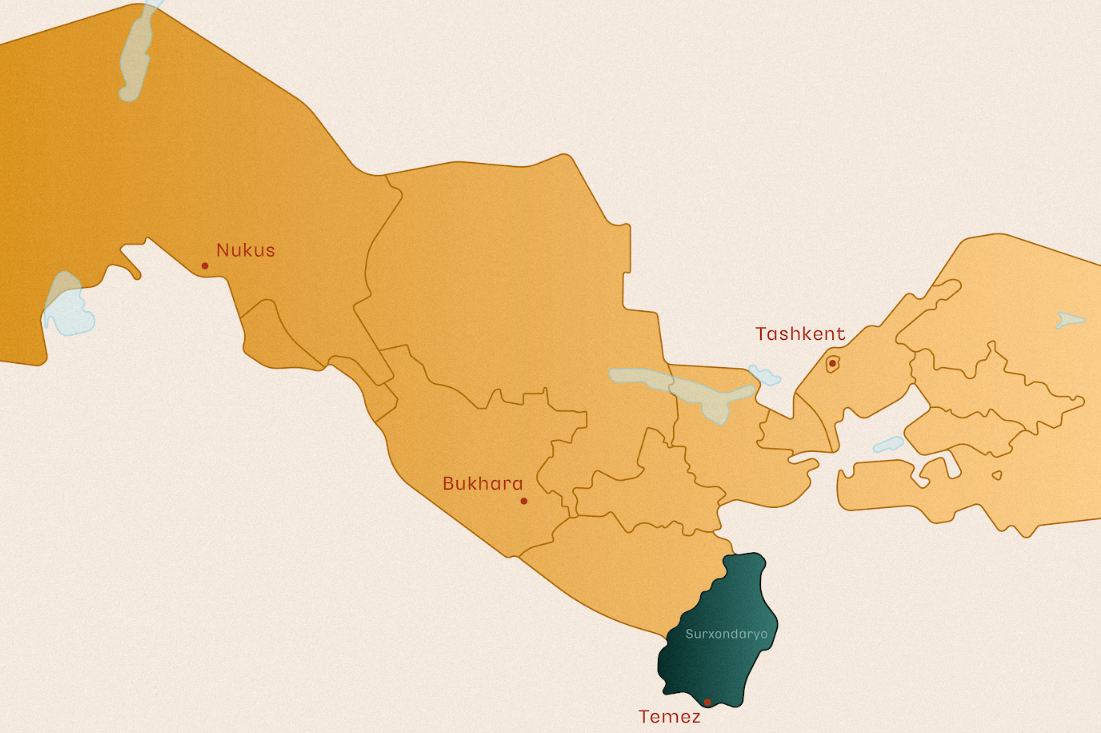 In Nazarbayev’s Kazakhstan, several disputes concerned access to the Aral Sea in a region facing severe water stress. This concern affected relations with Dushanbe and Bishkek as well: Syrdarya’s and Amudarya’s courses have indeed been a major source of disquiet for Uzbekistan because of water-guzzling cotton crops in the Ferghana Valley, whose foremost water sources are in Kirghizstan (Tian Chan mountain ranges) and in Tajikistan (the Pamir region),[11] whose reliefs are the start point for these rivers, while not overlooking blames about mistreated Tajik and Kyrgyz nationals in Uzbekistan. These challenging relations with its geopolitical contiguity egged Tashkent into waving stronger ties with external actors in order to diversify its partners. Furthermore, it should be noted that Uzbekistan considers itself as a pivotal element in the region, or as “a central country in regional balance”[12] thanks to its demographic and industrial power,[13] furthering the “world’s geopolitical pivot”[14] Eurasia is turning into. In fact, Uzbekistan is the most populous country in the region and is a major agricultural power,[15] not without due regard to its common border with all former Soviet republics and Afghanistan. In spite of hesitant Turkish attempts to slot into regional dynamics,[16] Tashkent headed towards Washington, whose interest was sparked by Uzbekistan’s proximity to Afghanistan. This geographic proximity would optimise Washington while leading its military operations in the aftermath of 9/11 by taking advantage of a springboard next to its military targets. Geographically, Uzbekistan shares common borders with Afghanistan in the Surxondaryo region, thus embodying major concerns caused by flourishing Islamic risks.
Therefore U.S. were given the Karshi Khanabad air base in 2001 to better coordinate their interventions in Afghanistan,[17] consequently diverting possible Islamic expansion in adjacent countries. Radical religious groups did not appear in the 1990s from the outset. Between the 1950s and 1970s first local Salafis began to flow into the region from adjacent countries or culturally similar ones, such as Saudi Arabia. First local groups started mushrooming in the region, yet with no will to destabilise the Soviet regime at a regional level. A higher activity was observed in the 1980s during a thaw period, when they commenced to promote a more puritanical, conservative Islam,[18] probably under the (although limited) influence of the Islamic Revolution in neighbouring Iran. During these years, some local cells started to spawn and transnationalise, exploiting, furthermore, spreading pauperism and “exclusion from economic modernisation”[19] coupled with “growing desertification by lack of irrigation, urban and industrial desertification.”[20] In attempting to understand regional dynamics, it is necessary to bear in mind that on the heels of the USSR’s balkanisation, Central Asian republics suffered far more than Russia itself did, which can explain Uzbekistan’s wish not to see the region become “a breeding ground for radicalisation.”[21] When exploring the revival of Islam at a local level, the Soviet invasion of Afghanistan in 1979 to safeguard the communist regime from virulent mudjahideens should not be neglected. According to Nathan Baillieux’s hypothesis, Islamic revival and transnationalisation were nurtured during the Soviet campaign when Central Asian soldiers stationed in Afghanistan started to rediscover their Islamic identity and to establish networks within the country they were supposed to defend from the religious threat. It was, for example, the case of Uzbek militant commander and co-founder of the Islamic Movement of Uzbekistan (IMU) Jumaboi Namangani, whose dexterity he acquired during the time of the Soviet intervention in Afghanistan was useful for the first operational actions of the movement.[22] This cell succeeded in striking significant blows to the Uzbekistan authorities. In 1999, IMU militants in the Kyrghyz city of Batken seized hostages and took control over the former building of the communist party. Among other things, they demanded the establishment of Sharia law in Uzbekistan and so on. At the time, Karimov had to accept certain demands, while other al-Qaida representatives began flowing into the region,[23] therefore, in Karimov’s eyes Namangan region appeared to be a major centre of radicalization becoming a powder keg for the entire country,[24] even though the hostage seizing took place elsewhere than in Uzbekistan. In fact, the eponymic city became the theatre of major skirmishes on Uzbek soil. In the period between the late-Soviet era and the years following the collapse of the USSR, several non-official religious schools emerged almost everywhere in Uzbekistan, nurturing Islamic doxas rather than what Nathan Bailleux calls “up-down Islamization”[25] promoted by central powers. In the city of Namangan, the Islamic organisation Adolat (Justice) became a sort of State within the State: it ensured public security and punished local wrongdoers, later beginning to impose Sharia-based precepts. Regardless of a certain popularity, the Uzbek government ended up intervening to crack down successfully on such parallel organisations and dismantled similar organisations elsewhere in the country, without disregarding several murders of Uzbek officials in the following years by remaining militants.[26] Besides the numerous attacks in the region, two main events outraged the Uzbek leadership. The first one took place in 1999 in the Uzbek capital and ventured with the goal of murdering the incumbent president, Islam Karimov, who, however, survived the attack that killed sixteen innocent civilians and injured over a hundred others.[27] In addition to this, another meaningful event in contemporary Uzbek history is the Andijan repression which took place in the eponymic city on 13th May 2005. In the aftermath of independence, Uzbek traders notably benefitted from the first wave of liberalisation and could launch private business employing locals, whose welfare tightly lew of such local brokers’ activity. The arbitrary arrest of the latter on account of alleged proximity to Islamic extremists consequently shed the only source of income for many families. Such measures tore apart any existing tacit contract between the emerging middle class, which, furthermore, was disadvantaged putable to Karimov’s isolationism, cutting Uzbekistan off from international outlets. As a result, those who drew their livelihood from these figures gathered in a public protest demanding their liberation, thus bringing out the importance of social networks and the altruism of similar small-scale realities. Despite the large mobilisation, locals faced fierce opposition from government-related forces which cracked down on the movement with overwhelming violence, making victims among protesters. Without disregarding the consequences of this event in the Uzbek political landscape,[28] it must be considered that these movements embodied a major political threat in the wake of earlier social movements which risked toppling or did effectively overthrow other regimes, such as in neighbouring Kyrgyzstan. The bloody repression of the Adijan protest caused a dramatic degradation of Uzbek-Western relations,[29] therefore leading to isolationism. In fact, in spite of emerging partnerships with major Western countries, Uzbekistan decided to freeze its relations with the West because of several criticisms regarding the way Tashkent silenced Adjian protesters. For example, even though Uzbekistan joined the GUUAM to contribute to major cooperation with former Soviet republics,[30] it decided to quit owing to strong criticism, hence gearing towards a tighter partnership with Moscow. Furthermore, Tashkent expelled the stationed U.S.-American military staff that used to take advantage of to counter the Islamic threats in neighbouring Afghanistan, eroding its relations with Washington as well despite certainly weakened yet still persisting Islamic threats. In the aftermath of Karimov’s death, Uzbek elites went through internal fights to determine the next leader which resulted in the ascension of former Prime Minister Shavkat Mirziyoyev in 2016. Even though Karimov’s model promoted internal stability, rapidly changing geopolitical landscapes required Uzbekistan to move towards a more dynamic paradigm. Mirziyoyev’s “holistic New Uzbekistan”[31] strategy aimed at bolstering civil society’s implication in public affairs, liberalising economic development and reinforcing the meaningfulness of the judiciary. Since development cannot be achieved without active cooperation with neighbouring countries, moreover, in a region rich in natural resources, this brand-new strategy seeks to embed more importance in Uzbekistan’s external relations, which Mirziyoyev achieved via high-level meetings with Uzbekistan’s immediate neighbours to defreeze Karimov’s wished isolation.[32] Hence, since 2016, Uzbekistan has been undergoing structural and doctrinal shifts to foster a renewed Uzbek identity both within and outside national borders.[33] Although it is not possible to portray Mirziyoyev’s new national strategy comprehensively,[34] it is nonetheless important to underline that Uzbekistan’s disenclaving passes through more transparency in military issues as well to ease concerns about Karimov’s opacity, which was achieved through the publication of Uzbekistan’s upgraded military strategy in 2018. Before understanding the reasons behind such a decision, it is necessary to provide readers with essential key concepts to understand the targets of a revised military doctrine and a renewed national security concept.
How to understand, conceive and apprehend a military doctrine and a national security concept?
Military doctrine aims at describing and codifying the contribution of the armed forces in military campaigns, major military operations and battles. Thus, a doctrine is not meant to be a stale monolith, because it changes throughout time and is determined by synchronous contingencies. Furthermore, a doctrine is the target it aims at. Barry Posen theorises three broad categories of military doctrines: an offensive doctrine usually aims at punishing an adversary, whereas a defensive doctrine tries to deny and deter adversaries, and a deterrent doctrine aims at disarming the designated adversary.[35] The geopolitical consequences of such doctrines cannot be eclipsed, because a given military doctrine results in precise implications for world politics. Is it possible, for example, to think that an aggressive doctrine does not push neighbouring countries to arm races, when a country officially states its perception of a progressively more problematic strategic environment, nurturing, thus, the Clausewitzian maxima seeing war as a mere continuation of politics by other means?[36] In addition to that, more specific features of a doctrine must be discussed. To quote Søren Sjøgren, “a doctrine surely codifies what works,”[37] whereas field pragmatism suggests what military professionals should do to make it work, thus being adaptive enough to escape the shackles of dogmatism, whose purity could hamper the goals of a given mission. Besides such epistemological debates, nonetheless, attention should be paid to the differences and similarities between the two main concepts – defence and security - possibly deserving more attention than other concepts expressed so far. In fact, defence and security seem to be intermingled and present certainly some features making them indissociable; however, they actually move on different paths that can bifurcate at some points without really splitting apart. Even though such terms look exchangeable and synonymic, subtle albeit meaningful differences do exist and need to be clarified to avoid blatant and confusing superpositions stemming from this conceptual nebulousness.
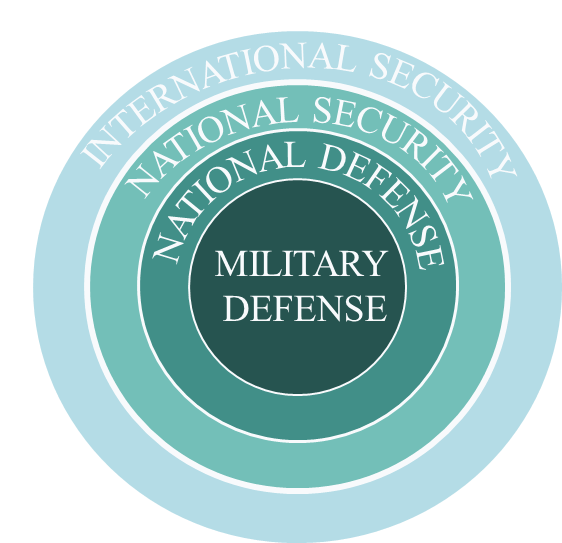
These concentric rings illustrate differences and coincidences. Hence, military defence is the core of this analysis, but encompasses a very limited scope as it basically designates protection against armed attacks from other entities. Armed forces must be deployed to ensure the survival of the nation against existential or sporadic attacks and rely on a military doctrine indicating when and under which circumstances armed forces are deployed.[38] The second and third rings do deserve to catch observers’ attention. According to French General Benoît Durieux, “national defence designates everything threatening our sovereignty, our interests and our freedom without drawing into armed forces.”[39] For this reason, national defence begins to conceive a wider spectrum of the aforementioned agonality. It includes anticipation, resilience, threat neutralisation (cyber, economic, informational), protection across social, economic, and international domains. National defence encompasses a huge scale of threats, thus “vulgarising” and diluting them. In Benoît Durieux’s eyes, national security gradually quits the primary military scope to encompass a wider range of risks and threats whose existence does not pose an existential threat to the nation. Indeed, “[b]eyond national defence, [it includes] the management of major crises which can harm our society, institutions or national interests. […] The main sectors’ risks are likely to occur in the following: the health of the population, critical infrastructures and supply chains of the national economy.”[40] Security, hence, differs from defence because it mainly relies on domestic issues whose functioning ensures common welfare and social, political and institutional stability. One could think about the successful military coup in Azerbaijan in the aftermath of the first Karabakh war commenced by Armenia and resulting in the beginning of Aliyev’s family power over Azerbaijan as a consequence of the bitter Azerbaijani debacle.[41] Lastly, international security, realised by converging efforts and mutual aid among states, does represent a kind of superstructure ensuring the dimensions embodied by the underlying concentric circles. One could conclude that the new forthcoming Uzbek military doctrine aims at defining a new Uzbek military culture, or at redefining the present one, since it defines values, rules and mentalities intrinsic to a country’s armed forces both in peace and wartime.[42] Uzbekistan is indeed gradually forging a new culture by investing in the youth and the education domain to promote this new culture. Thus, an outsider can consider doctrine as the dependent variable of external threats or military culture,[43] therefore undergoing rewritings, exclusions, and inclusions so that it takes synchronously into account the contingencies of the time it is written in, contemplating, furthermore, anthropological aspects a given culture has to consider.[44] With these considerations in mind, it is now possible to analyse the statements made by senior Uzbek leaders in order to assess and foresee the significant changes which might be part of the forthcoming doctrine.
Danger, threats and readiness in Uzbekistan’s statesmen
In the last few years, Central Asia has become a major crossway for international trade, such as the Chinese Belt and Road Initiative (BRI), and energy flows. However, regardless of this expanding importance, Central Asia still undergoes security matters that cannot be ignored if one tries to interpret Mirziyoyev’s willingness to update Uzbekistan’s military doctrine. 2018 Uzbek doctrine considered Uzbekistan’s defence policy “to rely on refusal to employ military force against other states, except to prevent or repel military aggression. [Moreover, it highlighted] indivisible security and the prohibition to foster its security at the other states’ expenses. [Finally, Uzbekistan promoted] non-interference in the internal affairs of States, [without disregarding] the pacific resolution of conflicts”.[45] The doctrine further underscores the importance of a nuclear-free region as stated in the year following the collapse of USSR and the transfer of former Soviet arsenal to Russia to prevent any misuse of such weapons from unofficial organizations.[46] Since the doctrine is being revised, it can, thus, be useful and insightful to analyse President Mirziyoyev’s and Defence Minister General Shukhrat Kholmukhamedov’s announcements in order to grasp the main causes of this doctrinal slide. On January 13th, Shavkat Mirziyoyev held an extended meeting of the Security Council to deal with several defence-related issues for the future years. The incumbent president held a speech attended by members of the Security Council, representatives of the Cabinet of Ministers, heads of ministries and agencies that make up the Armed Forces and numerous other organisations whose activity relies on defence-related issues. According to Shavkat Mirziyoyev, “large-scale efforts have been carried out in Uzbekistan to enhance defence capability”.[47] One can think that such a buildup of Uzbek military capabilities heavily relies on the ramping achievements in modern warfare in ongoing conflicts. Furthermore, such modernisation is not confined to the sole and mere military sphere since it implies moral-psychological training of servicemen, whose importance has supposedly been highlighted during the ongoing conflict in Ukraine. Indeed, in spite of a demographic bleeding at the very beginning of the war linked to massive refugee flows throughout Europe, and a certain unwillingness to fight for the Nation on the frontline notwithstanding, Ukrainian servicemen’s mental health has constantly sparked scholars’ interest. Maintaining the mental welfare of military servicemen represents a critical topic, “since sustained physiological and psychological stressors can adversely affect motivation, and might cost lives of many”.[48] The aforementioned stressors can be considered as an umbrella concept encompassing a large spectrum of harmfulness, hence possibly contributing to a significant deterioration of warfare performances. For this reason, it is announced that centres dealing with psychological readiness are being implemented to provide soldiers with adequate training during major crises.[49] In fact, special education centres have been created to nurture “fighting spirit, willpower, and endurance of military staff”[50] as a result of emerging cognitive warfare strategies.[51]
Moreover, it is possible to add a blatant “lack of relevant prior combat experience among recruits,”[52] further hampering the readiness and effectiveness in case of a major military crisis. The prior elements this study’s author has been detailing so far must not be analysed through a logic of interconnectedness, rather than through a discursive impermeability, a point also emphasised by the president himself. During his declaration, he underscores that “the nature of modern warfare has radically changed. Anyone who believes they can win by relying solely on the number of tanks, aircraft, or soldiers is deeply mistaken. Today's combat operations are conducted using artificial intelligence, digital command systems, long-range precision strike capabilities, cyber and robotic technologies, as well as political and economic pressure.[53] thus slightly undermining the importance of the battlefield in spite of Clausewitzian maxima about warfare. As a result, Uzbek modern warfare has to slot into contemporary digitalisation and enhanced professionalism. Even though Uzbekistan aims at enrolling five thousand additional recruits,[54] it is important to underline that “a completely new system will be introduced in the army that will enable young people to acquire at least one profession by the end of their service. Based on the main areas and specialisations of military units, professional training programs for servicemen will be developed within three to six months of training.”[55] This statement yearns to foster professionalism within the army, spreading new technologies that any army must master to compete in modern warfare, thus bolstering soldiers’ steadfastness. Moreover, if former doctrines were chiefly defensive, Uzbekistan does not gear toward growing aggressiveness, but a “proactive approach, anticipating possible risks and threats in advance”.[56] AI-related skills seem to play a major role in the Uzbek army. “Future recruits will (indeed) undergo training within the frameworks of the “One Million Programmers” and “Five Million Leaders in Artificial Intelligence” programs”.[57] Besides informatics and AI-related topics, Tashkent seeks to gradually gain more independence in military manufacturing. In fact, though Uzbekistan inherited the former Soviet military industry,[58] it does not succeed in weaning off the Russian military equipment and fell behind Kazakhstan in the same field.[59] Independence and self-reliance seem to be major elements in Uzbekistan’s new concept of national security. Moreover, since the beginning of aircraft-related attacks in Iran in March 2026, economics seem to play a key role in this field as well since they are interconnected to regional stability, as Uzbekistan’s President outlined. While oil and gas prices start to skyrocket on European and American markets, Tashkent withstands, in addition to this, potential slowing growth that national gold and oil reserves should amortise successfully.[60] Social stability cannot be eclipsed either. Social unrest stemming from domestic or external grievances could further abrade social cohesion, thus driving towards turmoil. Besides the 2005 Andijan events, one could remind more recent protesting movements which took place in Karakalpakistan’s capital, Nukus, in 2022; Kazakh riots close to overthrowing Tokayev’s regime and tensions between the Tajik Badakhshan region and Dushanbe for the sake of the death of an innocent civilian who went west as a result of security operations.[61] Regional stability relies, in the bargain, on wider local confrontations which might escalate. Thereupon, Afghanistan represents a major source of disquiet. On the heels of American retirement, leading to the consequent Taliban comeback in 2021, considerable incidents occurred in the region.
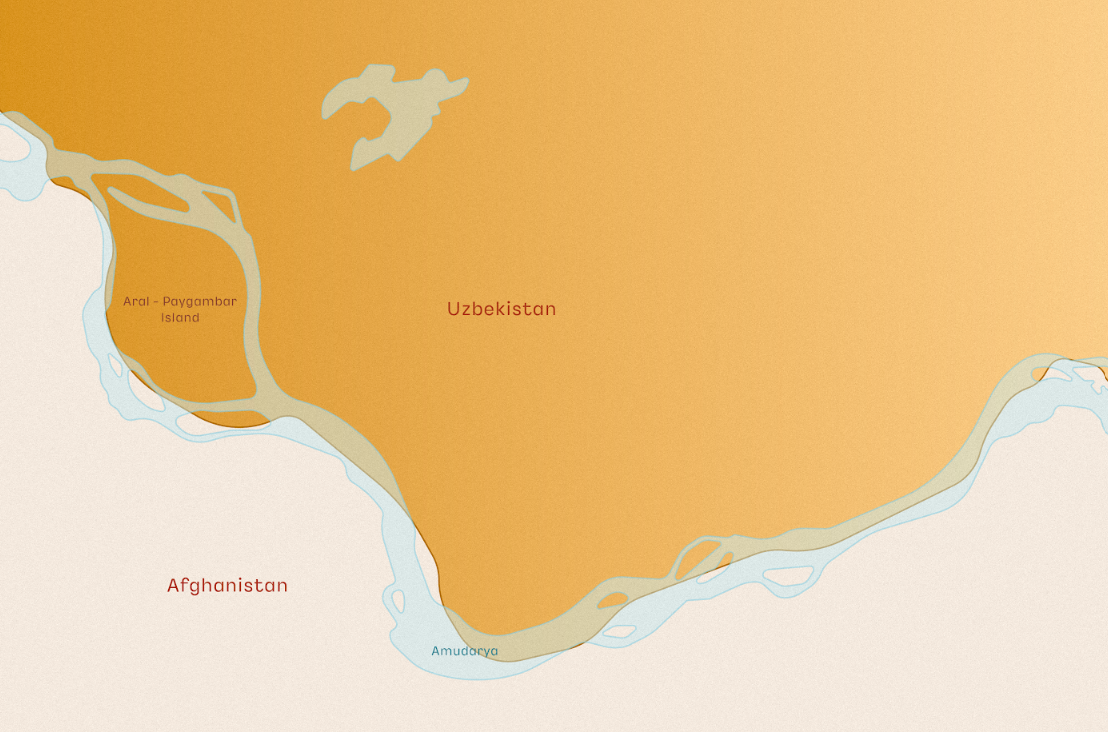
For example, some Uzbek soldiers died as a result of shootings between Uzbek patrols and Taliban detachments on the Aral-Paigambar Island situated in the Amudarya river marking the border between both countries.[62] Most importantly, late clashes between Kabul and Islamabad,[63] not only disquiet Tashkent owing to possible spilling tensions. General Shukhrat Kholmukhamedov’s speech underlines that major “trainings take place in regions close to the border that are difficult to access in mountainous regions,”[64] hence outlining possible menaces the aforementioned regions represent. Instability also cripples nascent regional trading routes, such as the railway PAKAFUZ meant to link Tashkent to Pakistan’s coastal city of Gwandar, consequently giving Uzbekistan’s landlocked economy sea access.[65]
Uzbekistan’s forthcoming updates of its military doctrine and national security concepts encompass several factors and elements. If Uzbekistan is apparently gearing towards its national forces modernisation to endure possible future threats, allusions to new conceptions are nevertheless made. The geoeconomics trends seem subordinated to geopolitical contingencies, which can overthrow them in favour of returning bellicosity. If one can only wait for the upgraded version of the aforementioned concepts, the historical and geopolitical period in which suspicion prevails towards an enemy in an existential rather than abstract and ideological perception,[66] demands immediate vigilance and adaptation. As a matter of fact, the contemporary world’s configuration makes it possible to observe ongoing transfigurations of conflictual morphology stemming from perpetual risks which could drive towards unexpected and swift clashes.[67]
Bibliography
Aron, Raymond. Paix et guerre entre les nations. Calmann-Lévy, (2004).
Babadzhanov, Khasan. “Military Industrialization of Uzbekistan in 1941-1945.” Nauchnyi dialog 11, no.5 (2022), 384-400: 10.24224/2227-1295-2022-11-5-384-40000.
Bailleux, Nathan. “Uzbekistan, Tadjikistan, Kirgyzstan: A New Epicentre of Islamist Terrorism in Central Asia? The Case of The IMU (Islamic Movement of Uzbekistan) and Its Networks.” IRIS, (11th February 2019): https://www.iris-france.org/127864-uzbekistan-tadjikistan-kirgyzstan-a-new-epicentre-of-islamist-terrorism-in-central-asia-the-case-of-the-imu-islamic-movement-of-uzbekistan-and-its-networks/.
BBC News. “The US asked to leave Uzbek.” 30th July 2025, http://news.bbc.co.uk/2/hi/asia-pacific/4731411.stm.
Blatny Janet M., and Søndergaard, Steen. “Cognitive Warfare.” NATO Science & Technology Organization, (2025): https://www.sto.nato.int/document/cognitive-warfare/.
Carrère d’Encausse, Hélène. L’Empire d’Eurasie. Fayard, 2025.
Chmykh, Elizaveta. “Mapping Fragile Areas: Case Studies from Central Asia.” Geneva Centre for Security Sector Governance (2021): https://www.dcaf.ch/sites/default/files/publications/documents/MappingFragileAreasCaseStudies.pdf.
Cumin, David. Stratégies militaires contemporaines. Ellipses, 2025.
de Meaux, Lorraine. Russie, la tentation de l’Orient. Flammarion, 2020.
degli Abbati, Carlo. L’Asie centrale. Histoire, économie, permanences. L’Harmattan, 2021.
Delcroix, Eugenio. “L’accordo storico sui confini in Asia Centrale.” Osservatorio Russia, (2025, 19th April): https://www.osservatoriorussia.com/2025/04/18/laccordo-storico-sui-confini-in-asia-centrale/.
Frankova, Irina, Klochkov, Vladislav, and al. “Psychological resilience in trench warfare: Leveraging mental health frameworks for Ukrainian soldiers.” Neuroscience Applied 4, (2025): https://doi.org/10.1016/J.NSA.2025.105528.
Hoiback, Harald. “What Is Doctrine?” Journal of Strategic Studies 34, no.6 (2011), 879-900: doi:10.1080/01402390.2011.561104.
Hukovskyy, Oleh, and al. “The combat path: Sustaining mental readiness in Ukrainian soldiers.” The US Army War College Quarterly: Parameters 54, no.2 (2024): https://scholar.google.com/scholar_lookup?title=The%20combat%20path%3A%20sustaining%20mental%20readiness%20in%20Ukrainian%20soldiers&author=O.%20Hukovskyy&publication_year=2024.
IAEA/МАГАТЭ. “Гарантии МАГАТЭ по договорам о создании зон, свободных от ядерного оружия (IAEA safeguards under treaties establishing nuclear-weapon-free zones).” Бюллетень МАГАТЭ 64, no.2 (2021): https://www.iaea.org/ru/bulletin/garantii-magate-po-dogovoram-o-sozdanii-zon-svobodnyh-ot-yadernogo-oruzhiya.
Ilkhamov, Alisher. “Uzbek Islamism”. Middle East Research and Information Project, (13th December 2022): https://www.merip.org/2002/12/uzbek-islamism/.
Jalolova, Sadokat. “Middle East Conflict May Slow Growth, but Gold and Oil Dynamics Could Cushion Impact.” The Times of Central Asia, 4th March 2026: https://timesca.com/middle-east-conflict-may-slow-growth-but-gold-and-oil-dynamics-could-cushion-impact/.
Jumayev, Yuldosh. “The "Uzbekistan - 2030" Strategy: The Culmination Of The "New Uzbekistan" Development Paradigm.” Modern Science and Research 4, no.9 (2025), 155: https://inlibrary.uz/index.php/science-research/article/view/137231.
Kellner, Thierry, and Mohammed-Reza Djalili. Géopolitique de la nouvelle Asie centrale. De la fin de l’URSS à l’après 11 septembre. PUF, 2006.
Khikmatullaev, Mukhiddin. “Analysis Of The Current Status, Problems, And Countermeasures Of Agricultural Product Trade Between Uzbekistan And China.” Latin American Journal of Education, no.5 (2025), 366-379: https://doi.org/10.5281/zenodo.17490162.
Levystone, Michaël. Asie centrale. Le réveil. Armand Colin, 2020.
Lorot, Pascal. “La géoéconomie, nouvelle grammaire des rivalités internationales.” L’Information géographique, no.1 (2001), 46. Marchewka Esturonne, Emma. “La fragmentation de l’espace sécuritaire afghano-pakistanais.” La Balise Diplomatique, no.45 (2026), 37-39, https://www.linkedin.com/feed/update/urn:li:activity:7437223177170345984/.
Mbebe, Achille. Politiques d’inamitié. La Découverte, 2016.
Natale, Stéphane. “De la paix paradoxale à la guerre perpétuelle. Les États à l’épreuve d’un neo-bellum.” Revue Diplomatie, no.128 (2024).
Naumkin, Vitaly. Radical Islam in Central Asia. Between pen and rifle. Rowman & Littlefield, 2005.
Noé, Jean-Baptiste. “(Éditorial) Kazakhstan : originalités d’un pays en pleine réforme.” Conflits Revue de Géopolitique, no.16 (2022).
Paitnaik, Ajay. Central Asia : Between Stability and Instability. Jawarharlal Nehru University, 2016 : http://journals.sagepub.com/doi/abs/10.1177/0020881717746549.
Peyrouse, Bastien, and Laruelle, Marlène. L’Asie centrale à l'aune de la mondialisation. Une approche géoéconomique. Armand Colin, 2010, 10.
Peyrouse, Sébastien. “Le tournant ouzbek de 2005. Éléments d'interprétation de l'insurrection d'Andijan.” Revue internationale et stratégique 64, no.4 (2006), 79-88: https://doi.org/10.3917/ris.064.0079.
Polat Abdumannob, and Butkevich, Nickolai. “Unraveling the Mystery of the Tashkent Bombings: Theories and Implications.” Demokratizatsiya 14, no.8 (2000): http://demokratizatsiya.pub/archives/08-4_PolatButkevich.PDF.
Posen, Barry. “Foreword: Military Doctrine and the Management of Uncertainty.” Journal of Strategic Studies 39, no.2 (2016), 159-173: https://doi.org/10.1080/01402390.2015.1115042.
Posen, Barry. The Sources of Military Doctrine: France, Britain, and Germany Between the World Wars. Cornell University Press, 1987, 13-24.
Poujol, Catherine. “L’islam en héritage : nouvelle approche d’une problématique persistante, entre résistance participative et acculturation passive.” Cahiers d’Asie centrale, no.13/14 (1999): https://journals.openedition.org/asiecentrale/360#quotation.
Prew, Owen. “Interview with Michael Hilliard. Inside Uzbekistan’s Regional Defense Strategy: An In-Depth Interview with Michael Hilliard.” The Times of Central Asia, 31st October, 2025: https://timesca.com/inside-uzbekistans-regional-defense-strategy-an-in-depth-interview-with-michael-hilliard/.
Radicioli Chini, Francesco. “Alexandre Douguine ou l’architecture d’une pensée recomposée.”, Les Cahiers des Conflits, no.17 (11th February 2026): https://www.revueconflits.com/alexandre-douguine-ou-larchitecture-dune-pensee-recomposee/.
Radicioli Chini, Francesco. “Pax Americana au Caucase.” La Balise Diplomatique, no.45 (2026), 42-46, https://www.linkedin.com/feed/update/urn:li:activity:7437223177170345984/.
Said, Edward. Orientalism. Knopf Doubleday Publishing Group, 1978.
Sjøgren, Søren. “What We Disagree about When We Disagree about Doctrine.” Journal of Strategic Studies 47, no.4 (2022): doi:10.1080/01402390.2023.2251170.
Speech of General Shukhrat Kholmukhamedov. “Расширенное заседание Совета безопасности Республики Узбекистан (Extended meeting of the Security Council of theRepublic of Uzbekistan).” Uzbekistan’s Ministry of Defence, (2026): https://www.youtube.com/watch?v=g9EKmnlDDQA.
Toktogulov, Beishenbeck. “Uzbekistan’s Foreign Policy Under Mirziyoyev: Change Or Continuity?” Eurasian Research Journal 4, no.1 (2022), 49-67: https://izlik.org/JA47GG95UK.
UZ Daily. “Президент Узбекистана провёл расширенное заседание Совета безопасности, обозначив приоритеты модернизации армии и оборонной системы (The President of Uzbekistan held an expanded meeting of the Security Council, outlining priorities for modernizing the army and defense system)”. 13th January 2026: https://www.uzdaily.uz/ru/prezident-uzbekistana-proviol-rasshirennoe-zasedanie-soveta-bezopasnosti-oboznachiv-prioritety-modernizatsii-armii-i-oboronnoi-sistemy/.
Way, Lucan A. “Between National Division and Rapacious Individualism Ukraine before and after the Orange Revolution.” The Brown Journal of World Affairs 14, no.2 (2020), 253-264: http://www.jstor.org/stable/24590729.
Yurtlibir, Murat. “Trajectory of Turkish Soft Power in Central Asia after the Collapse of the Soviet Union.” 135-137, In Soft Power in Central Asia: The Politics of Influence and Seduction, edited by Nourzhanov, Kyrill, and Peyrouse, Sébastien. Rowman & Littlefield, 2021.
Махамадиевич, Исматов (Makhamadievitch, Ismatov). “РОЛЬ ОБОРОННОЙ ДОКТРИНЫ В УКРЕПЛЕНИИ СИСТЕМЫ ОБОРОНЫ РЕСПУБЛИКИ УЗБЕКИСТАН (The role of defensive doctrine in the reinforcement of Uzbekistan’s defence system)”. Eurasian Journal Of Academic Research, (2024).
Президент Республики Узбекистана (Uzbekistan Republic’s President). “Обсуждены приоритетные задачи дальнейшего укрепления военной безопасности и обороноспособности страны Priority tasks for further strengthening the country's military security and defence capabilities were discussed)”. 13th January 2026: https://president.uz/ru/lists/view/8851.